-
Deloading involves modulation of training intensity, volume, duration, or frequency, as well as exercise selection, in order to promote recovery. Deloads are often pre-planned, but may also be implemented using an auto-regulatory approach based on fatigue or performance decrements.
-
The concepts of deloading, tapering, and training cessation share similar characteristics, with the key differentiator being their unique objectives.
-
Deloading has recently been defined as a period of reduced training stress designed to mitigate physiological and psychological fatigue, promote recovery, and enhance preparedness for subsequent training.
-
Deloading can be incorporated at any point within a training block with the chief goal of allowing for restoration and enhancing readiness for training.
-
Training cessation is characterized by a complete abstinence from structured training which may be most appropriate in cases of suspected injury, illness, or prolonged performance decrement.
-
The benefit of deloading over training cessation is that neuromuscular engagement and skill-related adaptations are preserved.
-
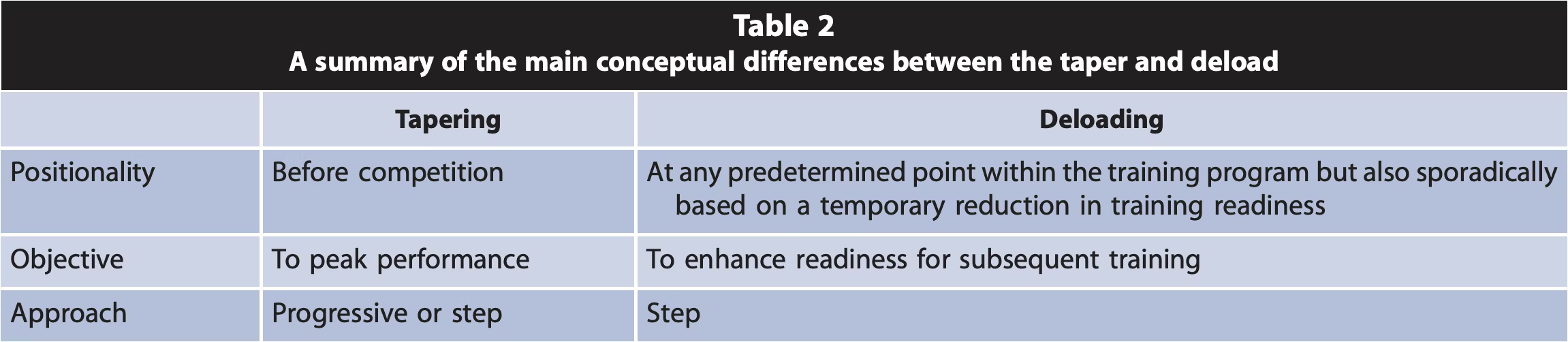
Tapering specifically occurs prior to a performance. Whether the performance be competitive in nature or not is irrelevant. Supercompensation is the primary objective, meaning that the athlete is able to express strength beyond that which they exhibit during training.
-
This is a key differentiator from deloading which merely aims to manage fatigue, not provoke the highest level of performance. The taper is a form of peaking, not a means of potentiating recovery prior to subsequent training bouts.
-
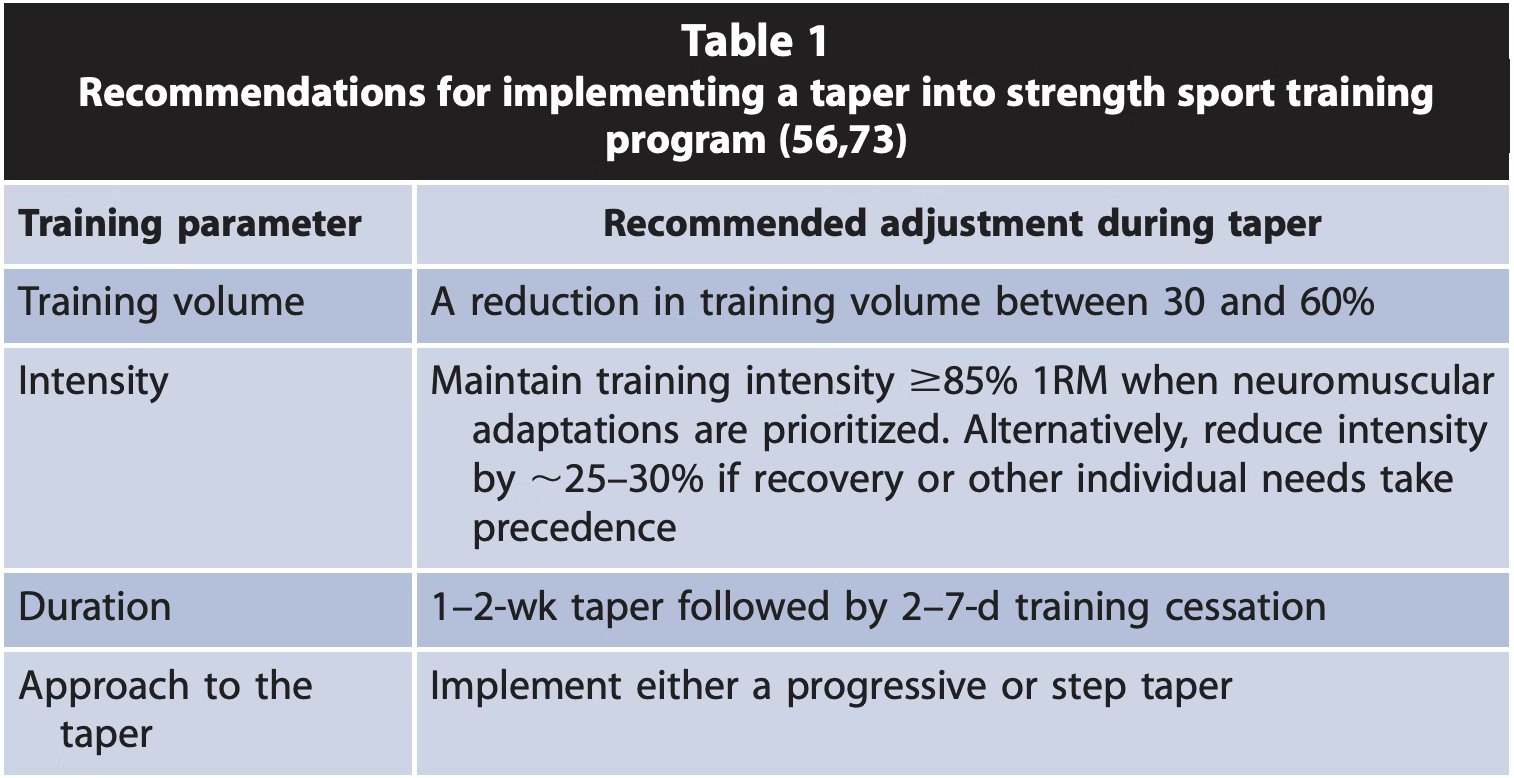
Various forms of taper exist, including linear reductions, exponential reductions, and step reductions. Training frequency is often maintained although intensity may increase, decrease, or remain constant. It has been suggested that step tapers most profoundly enhance muscle cross-sectional area, while exponential tapers improve neuromuscular performance.
-
In strength sports, the general recommendation is to initiate a taper by reducing training volume during the final two weeks prior to the performance event and after a period of planned overreaching. Short-term training cessation may be incorporated 2-7 days pre-event.
-
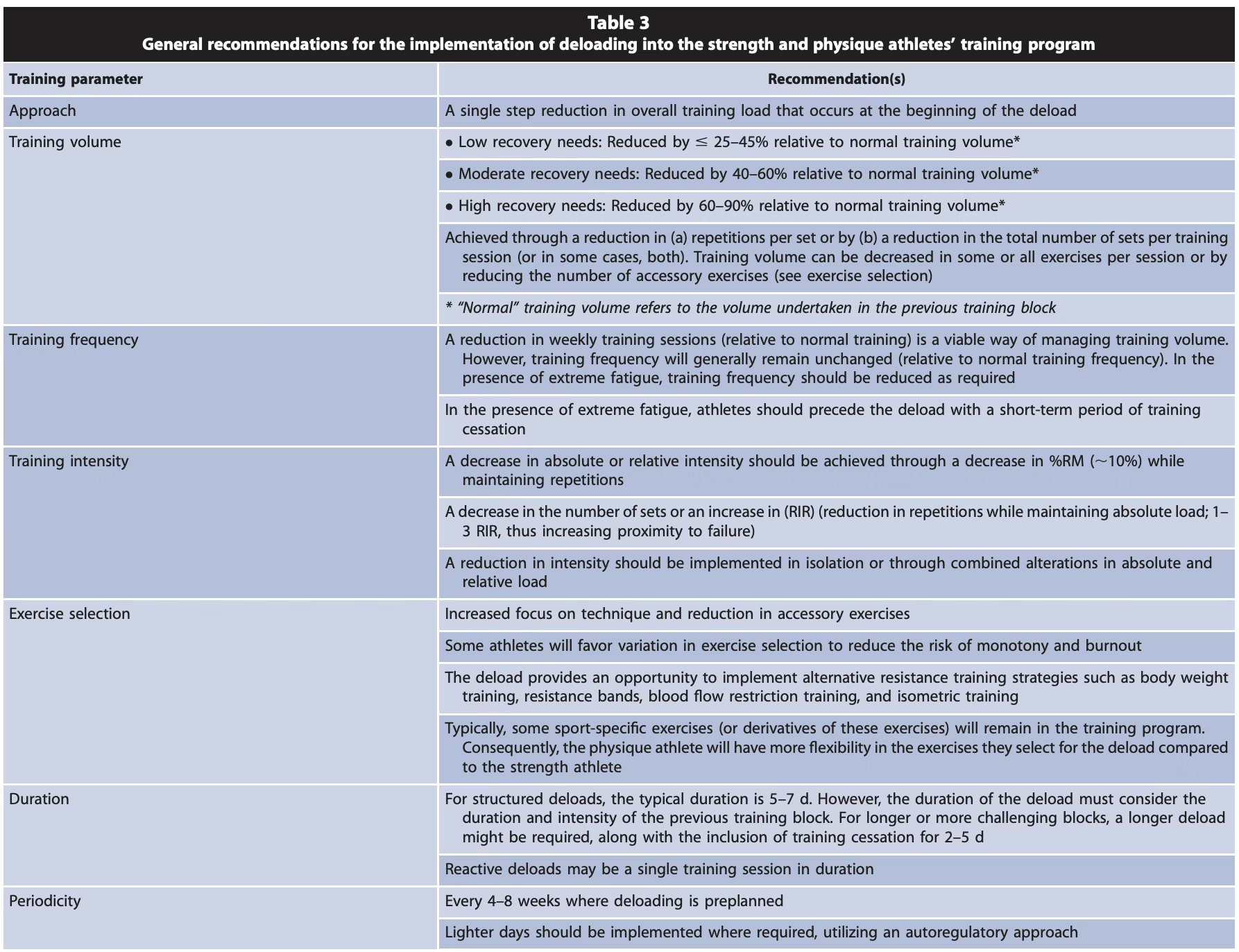
In contrast to tapering, deloads involve a single and non-progressive decrease in training.
-
While pre-planned deloads provide the benefit of a checkpoint for both athlete and coach, it suffers from the possibility of suppressed potential performance improvements due to unnecessary load reduction.
-
As opposed to automatically initiating a deload at pre-planned intervals, these checkpoints can serve as an opportunity to assess the need for a deload, allowing for a more auto-regulated approach.
-
Auto-regulation is characterized by an acute adjustment to training based on natural and individual fluctuations in readiness or response to training. This method is more reactive and flexible, enabling personalized training modifications that may be more conducive to daily life.
-
Implementing auto-regulation necessitates monitoring of performance metrics, perceived exertion, mood, and fatigue. Auto-regulation appreciates that response to training differs between athletes and that unpredictable life stressors play a role in athlete readiness.
-
Athletes who desire to use an auto-regulation approach should recognize the inherent requirement of strong self-awareness and diligent employing of monitoring tools or technologies.
Reference
-
Bell L, Darragh IAJ, Travis SK, Rogerson D, Nolan D. A Practical Approach to Deloading: Recommendations and Considerations for Strength and Physique Sports. Strength & Conditioning Journal. Published online May 16, 2025. doi:10.1519/ssc.0000000000000910
Leave a Reply